How to Actually Drink More Water (Habits That Stick)
You already know you should drink more water. The hard part is doing it. Here are the behavioral tricks that make hydration automatic, instead of one more thing to remember.

Almost nobody struggles to understand that water is good for them. The knowledge is not the problem. You can recite the benefits, you have read the articles, and you probably have a half-empty bottle somewhere within arm's reach right now. And yet by mid-afternoon you realize you have had two sips all day, your head hurts, and you are reaching for coffee instead.
This is the real hydration problem for most people. It is not a knowledge gap, it is a behavior gap. Drinking enough water is a habit, and like every habit, willpower is a terrible long-term strategy. You will not out-discipline your own forgetfulness day after day. What actually works is designing your day so that drinking water becomes the path of least resistance, something that happens almost without deciding. This article walks through the behavioral tricks that make that happen.
Why "Just Drink More Water" Never Works
The standard advice is to drink more water, full stop. It fails for the same reason "just eat less" fails as diet advice. It targets the outcome, not the behavior that produces it.
Hydration slips through the cracks because thirst is a weak, late signal. By the time you feel genuinely thirsty, you are already mildly dehydrated, and a busy brain overrides that quiet signal constantly. You are in a meeting, focused on a task, or simply distracted, and the prompt to drink never reaches the front of your mind. The result is not a failure of caring. It is a failure of cueing.
So the goal is not to want it more. The goal is to need to remember it less. Every technique below works by removing a decision, attaching water to something you already do, or making the bottle impossible to ignore. Get the system right and your daily intake climbs without you white-knuckling it. If you are not sure how much you are actually aiming for in the first place, the daily water intake guide is the place to set a realistic target before you start building the habit.
Anchor Water to Things You Already Do
The single most reliable trick is habit stacking: attaching a new behavior to an existing, automatic one. You already have a dozen things you do every day without thinking. Bolt a glass of water onto each one and you have built a schedule that needs no willpower.
Drink a glass first thing, before coffee. You wake up mildly dehydrated after seven or eight hours without fluid. A glass of water on waking is the easiest win of the day, and pairing it with the coffee you were going to make anyway means you never forget it. The best times to drink water piece explains why the morning window matters more than most.
Drink a glass before every meal. Three meals, three glasses, and a bonus: the water blunts appetite slightly, which is one reason it shows up in the hydration and weight loss guide. You already sit down to eat, so the cue is built in.
Drink whenever you do something repetitive. Every time you end a call, refill the glass. Every bathroom break, drink on the way back. Every time you switch tasks at your desk, take a sip. These micro-anchors add up faster than any single big gulp, and they fit naturally into the rhythm covered in the desk worker hydration article.
The point is that you are not adding a new thing to remember. You are riding on top of routines that already run on autopilot.
Make the Bottle Impossible to Ignore
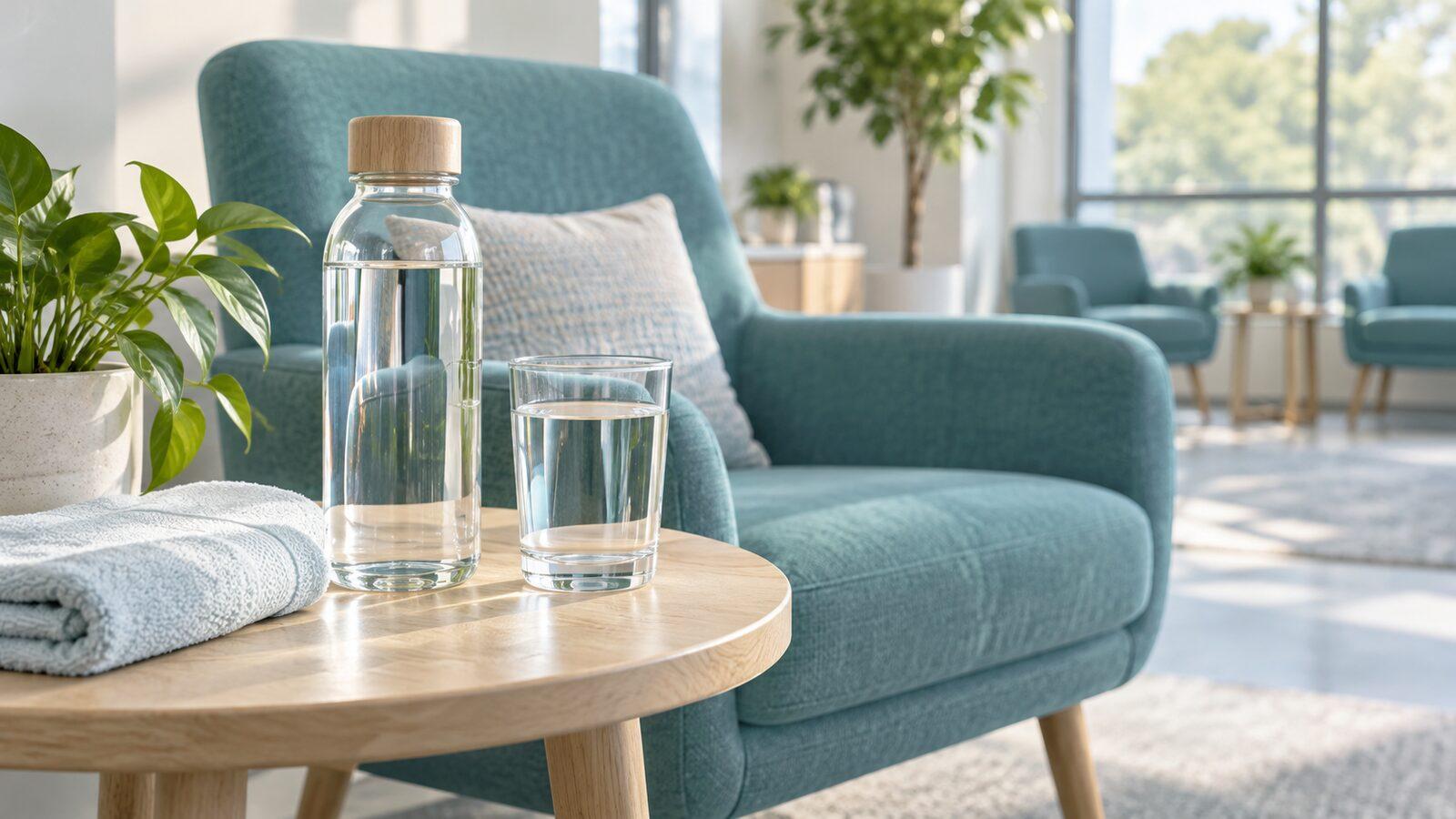
Your environment decides most of your behavior before willpower ever gets involved. If water is out of sight, it is out of mind. If it is in your hand, you drink it. So the job is to make hydration the default option in your physical space.
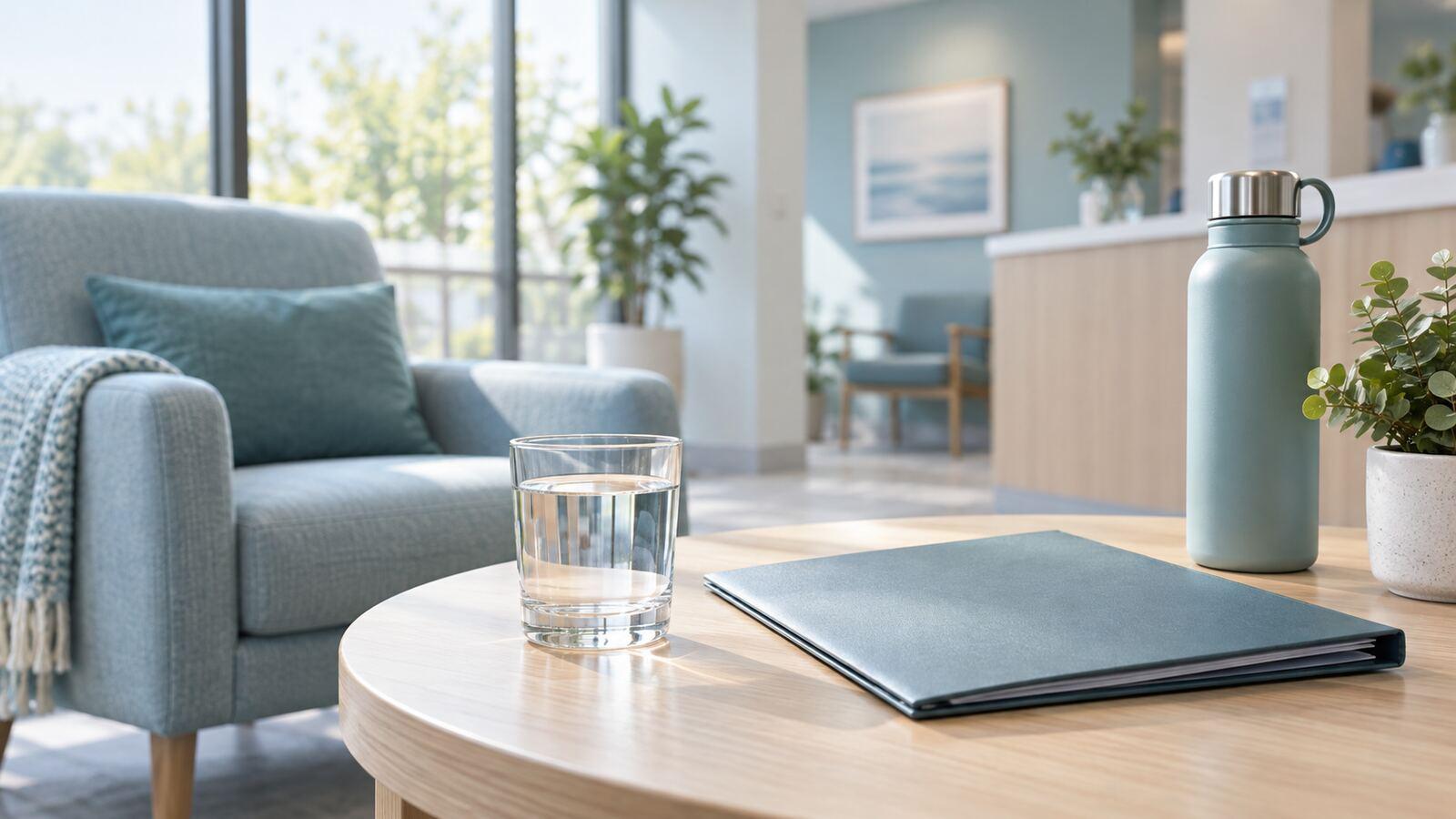
Keep a bottle within reach at all times. Not in the kitchen, not in your bag, but on your desk, beside your bed, in the cupholder. Proximity is everything. A bottle you can see and touch gets sipped; a bottle in another room gets forgotten.
Use a bottle you actually like. This sounds trivial and is not. A bottle that holds a satisfying amount, feels good to drink from, and that you do not mind carrying gets used far more than a flimsy one you tolerate. Some people drink more from a straw lid because sipping requires no effort. Find what removes friction for you.
Pre-fill the night before. Fill your bottle and put it where you will see it first thing. A full bottle waiting for you is a silent prompt; an empty one you have to wash and fill is an obstacle, and obstacles win.
Use size to your advantage. A large bottle means fewer refills and a clear visual gauge of progress. Some people do better with a smaller bottle they refill often, because each empty glass is a small, satisfying win. Either works. Match the container to the way your brain likes to track progress.
Lower the Friction with Flavor and Variety
A surprising number of people drink too little simply because plain water bores them. The fix is not to force it. It is to make the water more appealing, because the most hydrating drink is the one you will actually finish.
Infuse it. A few slices of cucumber, lemon, lime, berries, or mint turn plain water into something you reach for by choice. There is real benefit and a few overblown claims here, which the lemon water benefits and myths article sorts out.
Try sparkling. If still water feels like a chore, carbonation can make hydration genuinely enjoyable, and it hydrates just as well, as the sparkling versus still water piece confirms. Swapping a soda habit for sparkling water is one of the easier upgrades you can make.
Count the other things you drink. Tea, coffee in moderation, and milk all contribute to your total, and so do water-rich foods. The hydrating foods article shows that fruits and vegetables can cover a meaningful slice of your intake. Knowing this takes the pressure off and makes a realistic target feel achievable.
The principle is simple: variety lowers the friction. The less hydration feels like a discipline and the more it feels like a small pleasure, the less you have to fight yourself to do it.
Close the Loop with Cues and Tracking
Habits stick when you get feedback. Without it, the days blur together and you genuinely cannot tell whether you drank one glass or six. Two things fix this: external reminders for the early days, and a record you can actually see.
Set reminders while the habit is young. A few gentle nudges across the day bridge the gap until the anchors above become automatic. Treat them as training wheels, not a permanent crutch. Within a couple of weeks the habit stacking usually takes over and you can dial the reminders back.
Track what you drink. This is the part that turns intention into a measurable, improving habit. When you log each glass, the vague guilt of "I should drink more" becomes a concrete number you can see climbing toward your goal. That visible progress is genuinely motivating in a way that abstract advice never is. A tracking app like Water Tracker does exactly this: it sends timely reminders, logs every drink in a tap, and shows your real daily total instead of a hopeful guess. The difference between thinking you drink enough and seeing that you do is the difference between a wish and a habit, a gap the apps versus mental math piece digs into.
If you sweat heavily or train hard, plain water alone may not be the whole picture, and keeping electrolytes visible in a companion app like Supplements Tracker helps you see whether your sodium and potassium intake matches what your activity actually demands, as the electrolytes 101 article explains.
Set a Target You Can Actually Hit
Ambition is the enemy here. People who decide to triple their intake overnight almost always quit within a week, partly because they are running to the bathroom every twenty minutes and partly because the goal feels punishing. Hydration is a long game, and the only target worth setting is one you can repeat tomorrow.
Start from where you are. If you currently drink two glasses a day, aim for four, not eight. A small, comfortable increase that you actually sustain beats a heroic target you abandon. Once four is automatic, nudge it up again.
Spread it across the day. Chugging a liter at once mostly produces a bathroom trip, because your body flushes a sudden flood of plain water rather than holding onto it. Steady sipping is absorbed far better. Frequent bathroom trips in the first week are normal and usually settle as your body adjusts, but they are a signal to spread your intake out rather than front-load it.
Do not chase perfection. Some days you will fall short. That is fine. The habit is the average over weeks, not a perfect score every day. A 30-day push can help the routine take hold, which is the whole idea behind the 30-day hydration challenge: not to be flawless, but to make the behavior automatic by repetition.
Troubleshooting the Common Obstacles
A few specific problems trip people up over and over. Each has a simple fix.
"I forget." This is a cueing problem, not a character flaw. Lean harder on habit stacking and reminders until the anchors stick. Forgetting fades once water is attached to things you already do.
"I'm in the bathroom constantly." Usually a sign you are drinking large amounts in bursts, or your body is still adjusting to a higher baseline. Spread intake out and give it a week or two. If it persists or feels excessive, it is worth a word with a doctor.
"Plain water is boring." Covered above: infuse it, carbonate it, or vary it with tea and water-rich foods. Boredom is a friction problem, and friction has solutions.
"I only feel like drinking when I'm already thirsty." Thirst is a late signal, so do not wait for it. The anchors and reminders exist precisely to prompt you before thirst arrives. Learning to read the hidden signs of dehydration, like afternoon fatigue or a dull headache, also helps you catch the shortfall earlier.
Conclusion
Drinking more water is not a willpower problem, and treating it like one is why most attempts fail. It is a design problem. When you anchor water to routines you already run, keep a bottle you like within arm's reach, make it pleasant enough that you want to finish it, and close the loop by tracking what you drink, hydration stops being a daily battle and becomes something that mostly takes care of itself.
Pick one or two of these to start. Maybe a glass before coffee and a bottle on your desk you refill after every call. Let those become automatic before adding more. Stack small, sustainable wins, give yourself a couple of weeks, and the habit builds its own momentum. The goal was never to think about water more. It was to think about it less, while drinking enough of it without trying.
Further reading
Disclaimer: This article is for informational purposes only and does not constitute medical advice. Consult a healthcare professional for personalized guidance.