What to Drink After a Sauna: Water, Electrolytes, and Timing
Build a practical hydration plan around a sauna session: when water is enough, how to think about electrolytes, what to avoid, and when to stop and seek advice.
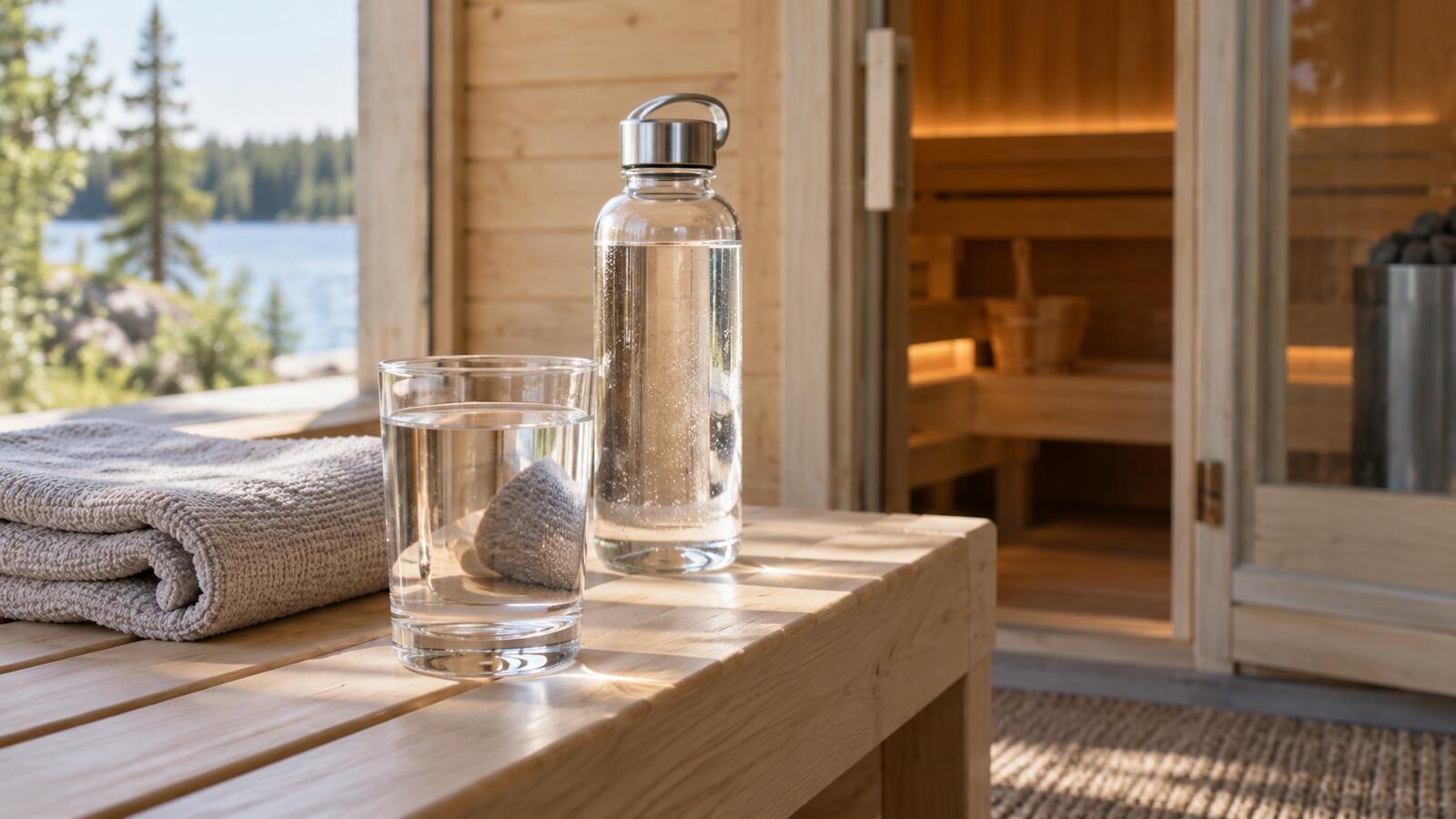
You step out of the sauna, sit down, and reach for a drink. Should it be water? An electrolyte mix? A measured bottle that someone online says replaces everything you sweated out? For an ordinary session, the most useful answer is usually simpler: cool down, drink water comfortably, and let the rest of your day, including meals, contribute to hydration.
Sweating does remove fluid. It also removes some salts. But a sauna session does not produce the same sweat loss in every person, and the number of minutes on the door does not tell you exactly what to drink afterward. Here is a practical sequence you can adapt without turning the visit into a calculation.
Before you enter: make the easy decisions
Put drinking water where you can reach it once you leave the hot room. If you arrived already thirsty after a workout or a hot commute, drink some water before entering and take time to cool down. Do not rely on one large drink after the sauna to make up for barely drinking all day. You do not need to force a large bottle down at the door.
Decide where your cool-down spot is. A bench, locker-room seat, or other comfortable place outside the heat lets you pause and notice how you feel. Harvard Health's sauna guidance advises leaving if you feel extremely hot, lightheaded, or dizzy and cooling down gradually afterward. That advice is more useful than an exact water target because it changes what you do when a session is not going well.
If a clinician has given you a fluid or sodium limit, use that individual plan. People with low blood pressure or certain heart conditions also need to be cautious with sauna use, as Harvard notes. A general hydration article cannot override those instructions.
After the sauna: water first, then reassess
Take a comfortable drink of water while you cool down. Keep the bottle nearby and drink again if you remain thirsty. You can have a normal meal or snack afterward rather than trying to replace every part of sweat with a specialty drink. This is an ordinary routine, not a treatment plan for heat illness.
The amount will differ by person and visit. Someone who has just finished a long gym session before the sauna may be thirstier than someone who arrived rested and used the sauna briefly. A hotter room, a longer stay, repeat rounds, clothing, and individual sweating also change the experience. None of those variables can be compressed into "everyone needs one liter after a sauna."
Check how you feel once you are outside the heat. Are you cooling down and feeling normal? Can you drink without nausea? Is thirst settling as you continue your day? Those observations guide the next drink better than chasing a bottle mark. Do not turn pale urine into a competition or drink rapidly until you feel uncomfortable. The aim is to return to your usual, comfortable pattern of fluids and meals.
When do electrolytes matter?
NIOSH explains that sweat contains both water and electrolytes, especially salts such as sodium and chloride. The same agency says sports drinks are often unnecessary for workers because regular meals and salt-containing snacks commonly replace what is lost. That page concerns working in heat, not a clinical test of what every sauna visitor needs. It is useful here for the principle: losing some salt does not automatically mean you need a powder or tablet after a short session.
Electrolytes become a more relevant question when the sauna is one part of a longer period of heavy sweating, for example a hard workout followed by repeated sauna rounds and more time in hot weather. A normal meal or snack with water may be enough. A sports drink may be convenient if you are away from food, but it is a choice based on the whole situation, not a mandatory post-sauna ritual. Our electrolytes guide explains the broader distinction between ordinary hydration and prolonged losses.
More sodium is not always better. If you have been told to limit salt, a high-sodium electrolyte product may conflict with your care plan. If you are tempted to add salt directly to water, read our salt-water guide before treating a kitchen measure as a personal prescription. Labels vary; plain water plus ordinary food is often the simpler option.
Three situations, three practical plans
A short visit on an otherwise ordinary day: bring water, cool down after leaving, and take a comfortable drink. Continue with your usual meals and fluids. There is no need to buy a special product simply because you used the sauna.
A visit after exercise: allow time to cool down from the workout before deciding whether to enter. Keep water and food available afterward, and consider all the sweating across the day. If you are already feeling unwell, skip the sauna rather than treating an electrolyte drink as permission to continue.
Several rounds with friends: make the breaks real breaks outside the heat. Keep your own water within reach and choose each next round based on how you feel, rather than matching someone else's schedule. You can finish your visit before the rest of the group and still enjoy the time together.
These are planning examples, not tested fluid doses. Harvard's guidance advises hydration without assigning one volume to every visitor. NIOSH's timed drinking advice addresses people working in heat; it should not be copied onto a recreational sauna visit as a personal requirement.
If you track drinks in Water Tracker, treat the entry as a record of what you drank, not a target the sauna created. You can compare visits over time, but the app cannot tell you whether dizziness is harmless or diagnose dehydration. Your symptoms and any individual medical instructions take priority over a streak or reminder.
What to avoid after a sauna
Avoid staying in the hot room to finish a planned time when you feel lightheaded or unwell. Leave, sit or lie somewhere cool, and tell someone nearby if you need help. A timer is not a reason to ignore symptoms.
Avoid trying to "make up" for a long session with a large amount of water all at once. A steady, comfortable return to drinking and food is more practical than a forced volume. NIOSH's heat-work advice is about regular fluid access and cooling breaks, not dramatic catch-up drinking at the end.
Avoid "detox" explanations for the water you drink afterward. A sauna makes you sweat; the water and salts lost in sweat need attention, but drinking afterward is not a special toxin-removal program. Similarly, a temporary drop on a scale after sweating is not a measure of fat loss. This guide is about replacing fluid and responding to heat, not interpreting weight changes.
When a drink is not the whole answer
The CDC's heat-illness guidance describes headache, nausea, dizziness, weakness, and heavy sweating among possible heat-exhaustion symptoms. It calls for leaving the heat, cooling, fluids when the person can drink, and medical assessment. Heat stroke, especially confusion, altered behavior, collapse, or seizures, is an emergency that requires immediate medical help and rapid cooling. Do not wait for a drink to "work" if someone has severe symptoms.
The CDC page addresses workers exposed to heat. A sauna visitor is in a different setting, but the safety distinction still matters: mild thirst after a routine session is one thing; feeling faint, confused, or persistently ill is another. If symptoms arise in the hot room, leave at once. If someone is confused or not fully alert, get emergency help and cool them rather than asking them to swallow a drink.
A simple personal sauna log
Keep the note short enough that you will actually use it:
- Before: Did I exercise, spend time in outdoor heat, or arrive thirsty?
- Session: One round or several? Did I leave feeling comfortable or unwell?
- After: What did I drink and eat as I cooled down?
- Next time: Would I shorten the session, bring water earlier, or leave more time to cool off?
The log is a memory aid, not a dosing formula. If several visits leave you feeling unwell, change the routine and discuss it with a clinician rather than trying to solve the pattern by adding more electrolyte powder.
Frequently asked questions
Is water enough after a sauna?
Often, yes, especially after a straightforward session with normal eating through the day. If the sauna followed prolonged exercise or other heavy sweating, a meal or snack and possibly an electrolyte drink may be useful in context. There is no universal product everyone needs.
How much water should I drink after a sauna?
There is no single liter amount supported for every sauna session. Cool down, drink water comfortably, and consider the whole day, including thirst, meals, exercise, and any fluid restriction you have been given. Do not force a large volume to satisfy an online formula.
Should I drink electrolytes before or after the sauna?
For an ordinary session, water and usual meals are a sensible start. Electrolytes are a context decision when sweating has been prolonged or food is not available, not a fixed before-or-after requirement.
What if I feel dizzy after leaving?
Stay out of the heat and cool down. Tell someone nearby, particularly if you feel faint. Seek medical assessment if symptoms persist or worsen; confusion, collapse, or other severe signs require emergency help. Do not use drinking water as a substitute for care.
Does sauna sweat "detox" the body?
Sweat is a way the body cools itself. This article offers no evidence that a sauna and a particular drink remove toxins or treat a health condition. Drink to replace fluid lost in the session, not to chase a detox claim.
The repeatable routine
Bring water, leave the heat when the session stops feeling comfortable, cool down, and drink at a pace that suits you. Continue with regular food and fluids. Add attention to electrolytes when the sauna is part of a longer stretch of heavy sweating. If you feel ill, respond to the symptoms rather than the bottle.
That routine is deliberately adjustable. The best plan is one you can follow without guessing at a universal sweat loss or buying a new drink for every visit. For more about when water alone may be insufficient, see electrolyte drinks compared.
Disclaimer: This article is for informational purposes only and does not constitute medical advice. Consult a healthcare professional for personalized guidance.