Does Water Expire? Shelf Life of Bottled, Tap and Stored Water
Water itself does not spoil, but bottles, storage and an open cap change the answer. Shelf life for bottled, tap and stored water, with the official guidance.
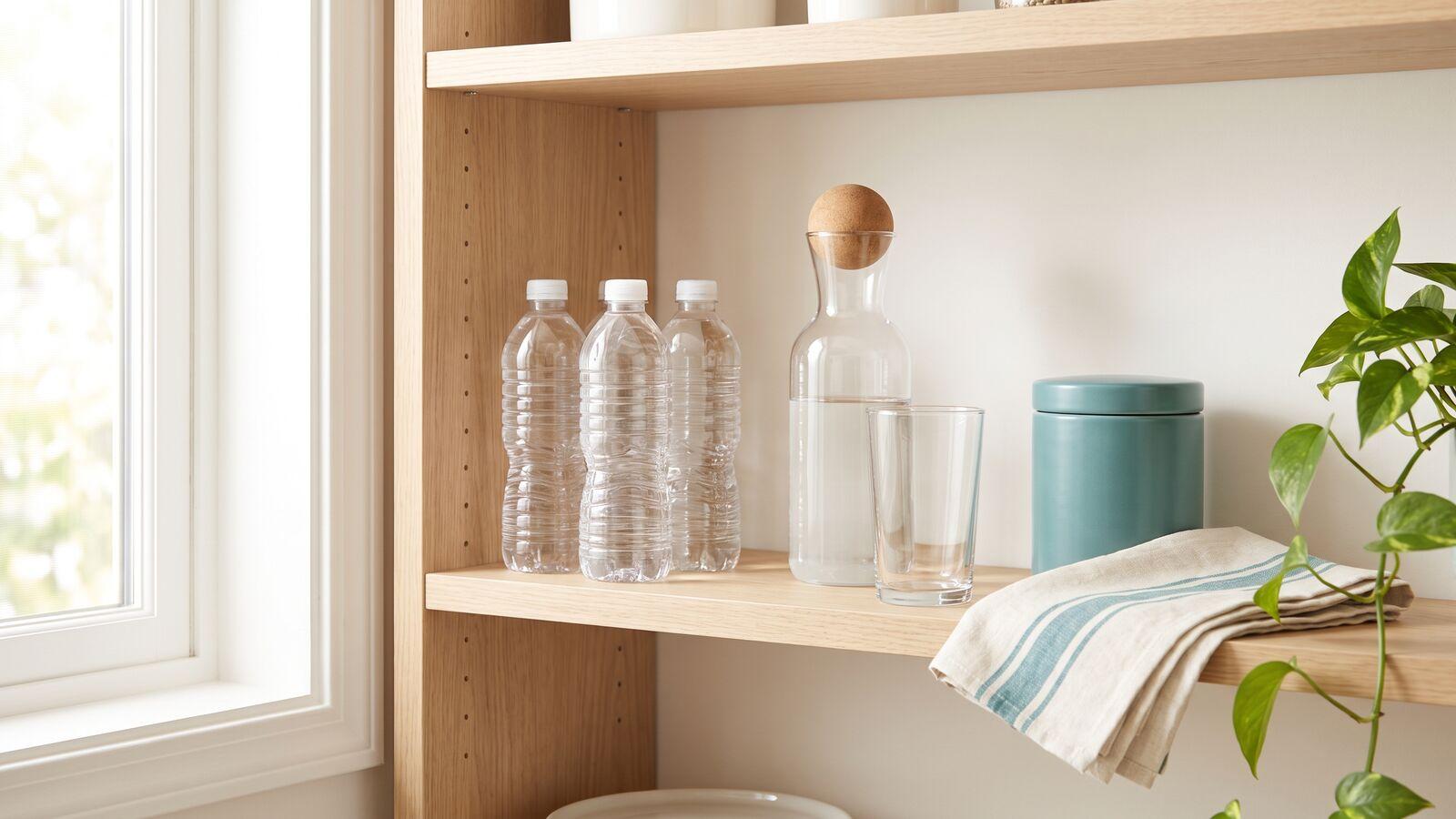
You find a case of bottled water at the back of the garage. The date on the cap passed two summers ago. Is it still fine to drink, or does water actually go bad?
Water itself does not expire. A sealed bottle does not turn into something dangerous on a set day. What changes the answer is everything around the water: the plastic it sits in, the heat it sat through, and whether anyone has opened it and put their mouth on it. That is why a sealed bottle from the pantry and a half-finished bottle from a hot car are very different questions.
Why bottled water has a date at all
The US Food and Drug Administration, which regulates bottled water as a food, set out its position plainly in a Q&A on bottled water regulation: bottled water is considered to have an indefinite safety shelf life if it was produced under the agency's manufacturing and quality rules and stays in an unopened, properly sealed container. For that reason, the FDA does not require an expiration date. The federal standard for bottled water, 21 CFR 165.110, covers what may be called "spring water" or "purified water", contaminant limits and warning statements, and says nothing about a shelf life.
So the date on the cap is the bottler's choice. The same FDA answer notes that bottlers may print dates voluntarily, and that long-term storage can cause "aesthetic defects, such as off-odor and taste." Read the date as a quality marker from the company, not a safety cutoff from a regulator.
There is one nuance worth knowing. The CDC's emergency water guidance tells people to "observe the expiration date for store-bought water." For an emergency kit, where you want the best-tasting, least-questionable supply, that is sensible advice: rotate before the date and the question never comes up.
Sealed bottled water: heat is the real enemy
Time on its own does little to a sealed bottle kept cool and dark. Heat is a different story, because most single-use bottles are made of PET plastic, and PET contains small amounts of antimony, a metal that can slowly move into the water.
A study from Arizona State University (Westerhoff and colleagues, 2008) tested nine US bottled waters. At room temperature (22°C), antimony levels stayed well below the EPA limit of 6 parts per billion and did not change meaningfully over three months. Heat changed the picture: the researchers estimated it would take 176 days at 60°C, 38 days at 65°C and 12 days at 70°C to exceed that limit. They also noted that summer temperatures inside cars, garages and enclosed storage spaces in Arizona can pass 65°C.
A 2014 study of 16 bottled water brands in China (Fan and colleagues) found the same pattern. After one week, antimony release was a few nanograms per liter at fridge and room temperature but reached up to 2,604 ng/L at 70°C. BPA release stayed below US EPA intake limits even in the worst case, while one brand's antimony exceeded the EPA intake limit after four weeks at 70°C.
Heat also changes how water tastes and smells. In a US military study of PET-bottled water stored for up to 120 days at 23 to 60°C (Greifenstein and colleagues, 2013), the plastic released organic compounds and odor limits were exceeded at the hotter temperatures.
The practical reading: a bottle that sat through one warm afternoon is not a hazard, but a case that has baked in a car or a garage all summer is worth replacing. Keep stored bottles somewhere cool and out of the sun, and away from fuel, paint and garden chemicals, which the CDC specifically lists as things to keep stored water away from.
Opened bottles, a glass by the bed, and refillable bottles
Once a bottle is open, the "indefinite" shelf life no longer applies. The water is the same, but now it has company. As a Cleveland Clinic doctor puts it in their advice on water bottle hygiene, we carry bacteria in our mouths and on our hands, and every time we touch, fill or uncap a bottle we introduce some.
How much that matters shows up in a small Canadian study of children's personal water bottles at an elementary school (Oliphant and colleagues, 2002). The national drinking water guideline for total coliform bacteria was exceeded in 13.3% of samples, for fecal coliforms in 8.9%, and for overall bacterial counts in 64.4%. These were bottles in daily use, not sealed water from a shop.
No health agency sets an official number of hours for an opened bottle. What the evidence supports is a simple rule: the warmer it is and the more mouths and hands have touched it, the sooner you should finish it or pour it out. Our own working guide, based on the sources above:
Opened bottle you drank from: Finish it within a day at room temperature. If you want to keep it longer, cap it and put it in the fridge; the FDA notes that chilling food at or below 4°C (40°F) slows the growth of bacteria.
A glass left out overnight: Usually fine to drink if it was clean tap water and nothing fell in. Dust, insects or a pet's tongue are good reasons to pour it out and start fresh.
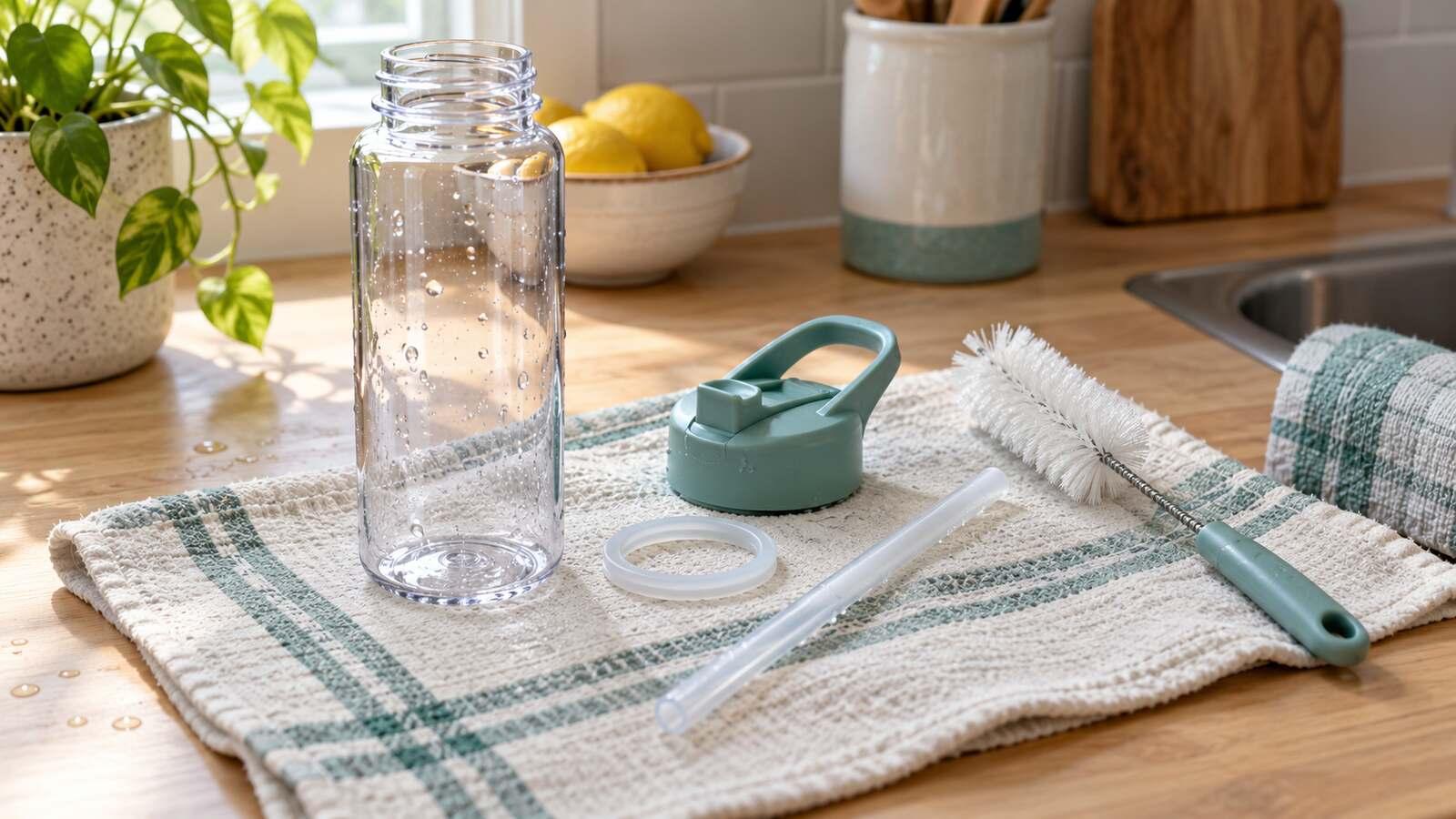
Refillable bottles: The bottle, not the water, is the weak point. Rinse it after every use and give it a full clean with the parts taken apart at least once a week, as the Cleveland Clinic recommends. Our guide on how to clean a reusable water bottle goes through the lid, straw and seal step by step.
Tap water and emergency supplies at home
Water you bottle yourself from the tap does come with a date: the official advice is to replace it every six months. Both Ready.gov and the CDC say this. Ready.gov's preferred option is commercially bottled water kept sealed in its original container in a cool, dark place; home-filled containers are the alternative.
If you do fill your own, the CDC's steps are specific:
Container: Use food-grade water storage containers. If you cannot, choose one with a tight lid, made of durable material (not glass), and never one that held bleach, pesticides or other toxic chemicals.
Cleaning: Wash it with soap, then sanitize with 1 teaspoon of unscented household bleach (5 to 9% sodium hypochlorite) per quart of water, shake so it touches every surface, wait at least 30 seconds, pour it out and let the container air-dry.
Storage: Label it "drinking water" with the date, and keep it at 50 to 70°F (10 to 21°C), out of direct sunlight and away from gasoline and pesticides.
Using it: Pour or use a clean scoop each time; do not dip your hands in.
How much to keep? The CDC recommends at least 1 gallon (about 3.8 liters) per person per day for 3 days, a 2-week supply if you can manage it, and more for pregnant women, people who are sick, pets, and anyone in a hot climate.
Shelf life by situation: the guidance and who says it
The top search results for this question give opinions or a table without sources. Here is each common situation with the official guidance behind it:
| Situation | How long | What to do | Source |
|---|---|---|---|
| Sealed bottled water, stored cool and dark | No safety limit | Rotate by the printed date for best taste | FDA Q&A; 21 CFR 165.110 (no date required) |
| Sealed bottle in an emergency kit | Until the printed date | Replace before the date; keep sealed in the original container | CDC; Ready.gov |
| Sealed bottle left in a hot car or garage | Shortens with heat | Replace bottles that have baked for weeks; antimony release rises steeply above 60°C | Westerhoff 2008; Fan 2014 |
| Opened bottle you drank from | About a day at room temperature (our guide) | Cap it and refrigerate at 4°C or below to keep longer | Cleveland Clinic; FDA on chilling |
| Glass of tap water left out overnight | Usually fine by morning | Pour it out if anything got in it | Editorial guidance |
| Refillable bottle | Water: same as opened | Rinse after each use, deep clean weekly, dry completely | Cleveland Clinic |
| Home-stored tap water in a clean container | 6 months | Label with the date; 50 to 70°F, out of sunlight, away from chemicals | CDC; Ready.gov |
How to tell water has gone wrong
Your senses are a reasonable first check. The EPA's emergency disinfection guidance says not to use water with floating material in it, a dark color, or a questionable odor. Add to that a bottle that is swollen, cracked or leaking, a broken seal on a "sealed" bottle, and a chemical or plastic smell after storage in heat.
Boiling has limits. The CDC's boil water advice is to bring clear water to a rolling boil for 1 minute, or 3 minutes above 6,500 feet. That kills germs, but boiling does not remove chemicals, and the EPA notes it does not remove heavy metals or salts either. So boiling can rescue tap water you stored and are unsure about. It cannot fix a bottle that smells of plastic or petrol: throw that one away.
If you are wondering about the source rather than the age of your water, our guide to tap, filtered and bottled water compares the options, and distilled vs purified water explains what those labels mean.
Common questions
Can you drink bottled water that expired years ago?
If it stayed sealed, cool and out of the sun, the FDA's position is that it has no safety shelf life, so it is very likely safe. It may taste flat or slightly of plastic. If it spent summers in a hot garage or car, or the seal is broken, replace it.
Is water left in a hot car safe to drink?
The studies above found antimony release climbs steeply after days to weeks at 60 to 70°C, so a bottle that sat in a warm car for an afternoon is very unlikely to be a concern. Do not keep your drinking supply in the car, and replace bottles that have stayed there for weeks in summer.
Does water last longer in the fridge?
A sealed bottle does not need it. An opened bottle or jug does keep better cold, because chilling to 4°C (40°F) or below slows bacterial growth. Keep it capped so it does not pick up fridge smells.
Does tap water go stale?
Tap water in a clean, covered container is fine for months; the official advice is to replace home-stored water every six months. A covered glass or jug that sat out overnight is usually fine if nothing got into it.
How much water should I store for emergencies?
At least 1 gallon (about 3.8 liters) per person per day for 3 days, according to the CDC, and a 2-week supply if possible. Store more for pregnancy, illness, pets and hot climates.
Conclusion
Water does not expire, but the way it is stored does. Sealed bottled water kept cool and dark has no safety limit; heat, an open cap and dirty bottles are what shorten its life. Rotate emergency supplies on the official six-month schedule, finish opened bottles quickly or chill them, and keep your bottle clean. If you track your water in Water Tracker, a daily reminder to refill is also a natural moment to give the bottle a rinse.
Further reading
- How Often to Wash Your Water Bottle and Clean Every Part
- Water Quality Matters: Tap vs. Filtered vs. Bottled Water
- Distilled vs Purified Water: Which Is Better to Drink?
This article provides general information and is not a substitute for advice from your local water authority or a health professional.
Disclaimer: This article is for informational purposes only and does not constitute medical advice. Consult a healthcare professional for personalized guidance.